On This Page· 5
The mechanic in District 3 wipes grease from his hands, hands you a small glass of hot green tea, and asks no questions. You are waiting for your motorbike chain to be adjusted, the air is thick with humidity, and the only sound is the kettle whistling in the corner. There is no incense, no formal bowing, and no performance. This unremarkable moment, where steam rises from a simple glass, defines the true Vietnamese tea experience. It is not found behind the polished counters of staged ceremony venues or the formal tea houses that cater to tourists seeking a structured ritual.
To understand this culture, step away from the curated tours and look for the daily, unstaged encounters that shape social life in Saigon. The most genuine way to learn these customs is by observing how tea is used as a tool for connection rather than display. Whether it is a barbershop owner warming your hands after a cold ride or a street vendor sharing a stool with you, the act is one of hospitality, not theater. This is the authentic tea culture at its core: quiet, practical, and deeply human.
Where Vietnamese tea lives in everyday Saigon life
| Aspect | Staged Tea Ceremony | Everyday Tea in Saigon |
|---|---|---|
| Location | Traditional teahouses, temples, or specialized culture spaces | Barbershops, motorbike repair garages, and street corners |
| Social Vibe | Formal, observant, and performance-oriented | Relaxed, conversational, and service-based |
| Cost | 100,000 to 200,000 VND per person | Free as a standard hospitality amenity |
| Authenticity Signal | Ritualistic presentation and historical context | The immediate, unscripted act of social care |
To truly learn Vietnamese tea, you must look past the staged performances. The authentic tea culture is not a show; it is a quiet mechanism of social lubrication. In Vietnam, the phrase “uong nuoc” (drink water/tea) is a standard invitation to connect, not a command to taste a specific blend. While traditional ceremonies occur at temples during Tet, the daily reality of the Vietnamese tea experience is found in how locals treat one another during routine tasks. It is an act of hospitality so deep it has become invisible to those who live it, yet visible to the observer.
In a local barbershop, the ritual is simple. Before the clipper starts, the barber pours a glass of hot green tea. This is not a performance; it is a welcome. The sound of the kettle boiling in the back corner and the warmth of the glass against your palm ground you in the space. This moment of pause creates a bridge between the customer and the service provider. It is a way of saying, “I will take care of you,” without a single word being spoken. The act of serving tea maintains social harmony, a core value in Saigon’s fast-moving social code.
The motorbike repair shop serves a similar role as a hidden hub for these traditions. A mechanic fixing your chain will often pull a thermos from a shelf and offer you a hot drink while you wait. This is where the social conversation happens. You sit on a plastic stool, watching the work, and share a quiet moment with a stranger who is now, for the next twenty minutes, your tea partner. This is the most accessible way to witness genuine local behavior. You are not there to learn the history of the leaf; you are there to observe how people build trust through small, consistent gestures of care. These everyday moments are the true foundation of the city’s social life.
Tra da stalls in District 3 and 4: your street-level introduction
The tra da stall is the closest thing Saigon has to a public square. You do not reserve a table; you simply sit on a small plastic stool. To learn Vietnamese tea here, you observe, you taste, and you pay. It is the most honest introduction to the local rhythm of the city.
The District 3 buzz
Around Nguyen Thi Minh Khai, the energy is relentless. This area has one of the densest concentrations of stalls in the city, where the sidewalk is a shared space for tea, foot traffic, and motorbike lanes.
The scene is a true social mix. You will find taxi drivers sharing a glass with university students, all waiting for the next batch to be brewed. The traffic is heavy, the horns are constant, and the conversation is loud. It is a sensory overload, but it is where the city’s social pulse beats fastest. If you want to understand how tea functions as a social lubricant in a crowded, noisy environment, this is the place to watch.
District 4’s quiet corner
Contrast this with District 4, near the river. Here, the atmosphere feels much more private. You are unlikely to see a large group of tourists; the crowd is almost entirely local residents. This offers a more subtle observation of authentic tea culture. The pace is slower, and the interaction between the vendor and the regulars is visible. It is a quieter, more intimate way to experience the daily ritual without the backdrop of a major commercial artery.
Etiquette and practical tips
Navigating these Ho Chi Minh tea houses requires a few simple rules:
- Sit and observe: There is no formal menu. Look at what the people around you are drinking. Point at their glass and ask for the same. It is a respectful way to participate without presuming a level of knowledge you do not yet have.
- Pay as you leave: The total is usually displayed on the wall, and you settle the bill before you walk away. Keep your change handy.
- Mind the water: The tea is typically brewed with tap water. While it is safe for most, those with sensitive stomachs should be aware of this practice. Sticking to hot tea (which is boiled) is generally more comfortable than the iced version for sensitive travelers.
The price is negligible, usually between 5,000 and 10,000 VND for a glass. It is a low-stakes, high-reward way to absorb the city’s atmosphere while taking your first steps into Vietnamese tea traditions.
The two-hand rule: why tea is a sign of respect
In Vietnam, a cup of tea is rarely just a beverage; it is a social contract. When a mechanic, barber, or shop owner offers you a glass of hot green tea, declining it can be interpreted as a slight. Accepting every cup offered maintains social harmony and signals that you respect the host’s hospitality. This principle is the first step in learning how to navigate the local social code. By accepting the tea, you acknowledge the relationship, however brief, and you show that you value the connection over your personal schedule or thirst.
The physics of respect
The most visible gesture in this exchange is the two-hand cup holding. When receiving or offering a tea glass, use both hands to support the cup from the bottom and the side. This simple action conveys care and attention. In a restaurant or a busy shop, where hands might be cluttered or the glass might be hot, this gesture distinguishes a respectful guest from a careless one. It is not about perfection; it is about the intention to handle the object with dignity. If you are unsure, observe the locals: the eldest in a group often receives the tea first, and the server pours with a steady hand, eyes meeting the recipient’s briefly. This flow is part of the authentic tea culture you are experiencing.
Face and the pouring ritual
In business and family settings, the way tea is poured carries weight. Serving the eldest or the most senior person first is a non-negotiable norm. The level of tea in the cup can reflect the giver’s intent to maintain “face” for the receiver. A cup that is too full can be awkward; one that is empty is insulting. The pour should be smooth, avoiding spillage, which suggests carelessness. These nuances are part of the refined packaging of social norms in Vietnam. The complex web of respect, hierarchy, and hospitality is packaged into a smooth, invisible code that, once understood, makes your interactions feel effortless. By mastering the two-hand rule and the timing of the pour, you move from being an observer to a participant in the daily rhythm of Saigon tea traditions.
A local’s guide to finding quality tea for your gifts
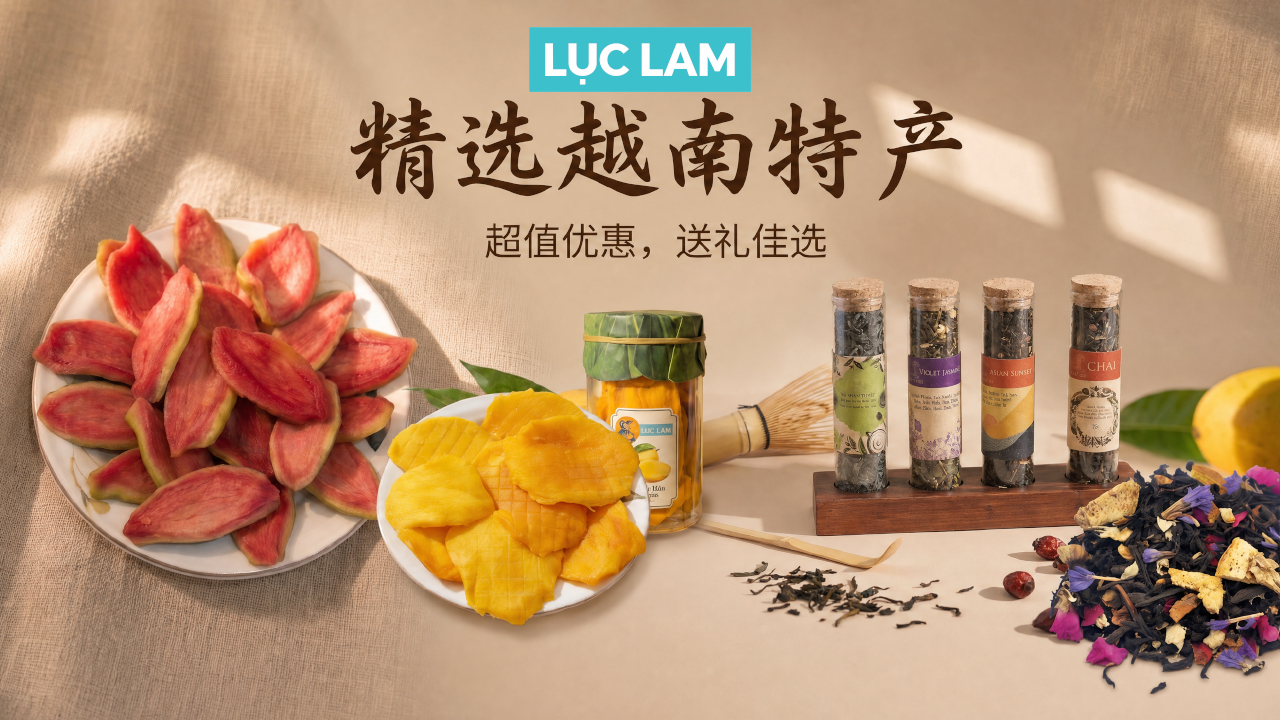
The Vietnamese tea experience on the street is about the moment: the steam, the plastic stool, the conversation. But when you head home, you need a souvenir that survives the journey. For that, you shift your focus from the sidewalk to specialized tea shops. While bustling tourist areas like Ben Thanh Market offer variety, they often lack the price transparency and quality control you need for a meaningful present. A dedicated retailer, such as Lục Lam Gift, ensures you are paying a fair price for genuine leaves, not a markup for your tourist status.
The safe bets: Lotus and Jasmine
If you are undecided, lotus tea and jasmine tea are the most approachable choices. They are not just popular; they are staples of authentic tea culture because of their gentle, floral profiles that appeal to almost any palate. Unlike stronger green or oolong varieties, these two are easy to choose for a broad range of recipients, from a strict elder to a casual colleague. You don’t need to be an expert to pick a jar; the quality is consistent, and the scent alone tells you what to expect.
Packaging as a statement
For business partners or bosses, the container matters as much as the leaves. Look for brands that offer refined packaging with clear labeling and elegant design. A gift should feel considered, not improvised. Individually packed Vietnamese gifts are particularly suitable for corporate settings, as they allow you to give a single, high-quality unit without opening a shared package. This level of presentation signals that you have taken the time to find something appropriate, turning a simple jar of tea into a respectful gesture.
Frequently asked questions about Saigon tea traditions
Is the tea served in restaurants a performance?
No. It is a standard amenity. Much like a Western restaurant serving water, a cup of hot green tea arriving with your first dish is a baseline of hospitality. It is not a show meant to be analyzed or appreciated as art; it is simply a courtesy extended to every guest.
What is the difference between Vietnamese and Chinese gongfu?
Vietnamese tea culture is quieter and less theatrical. It is tied to family gatherings and temple life rather than the multi-step, choreographed presentation of Chinese gongfu. While gongfu emphasizes the ritual of the brew, the authentic tea culture here emphasizes the social bond formed over the simple act of drinking.
Where can I buy tea that is easy to choose for a business partner?
Look for specialized shops in District 3 or 4 that offer curated Vietnamese gifts. These locations provide refined packaging and individually packed varieties suitable for gifting to bosses or clients. This approach removes the guesswork, making it simple to select a thoughtful, high-quality item without navigating the complexities of loose-leaf markets.
Is it rude to refuse a cup of tea?
It can be interpreted that way. The “accept every cup” principle is key to maintaining social harmony. Refusing an offer can seem like a slight to your host or service provider. To truly learn Vietnamese tea etiquette, simply accept the glass, hold it with both hands, and take a sip before finishing your main meal. This small gesture signals respect and keeps the flow of conversation smooth.
The true Saigon tea traditions are defined not by the complexity of the brew, but by the quiet act of giving and receiving it. Whether you are sitting on a plastic stool in District 4 or watching a mechanic adjust a chain, the core of this authentic tea culture is the warmth shared between host and guest. When you walk away from your trip, you carry with you these moments of simple connection.
If you want to bring these flavors home, look for curated collections that offer refined packaging and are tailored for the people you wish to honor. A thoughtful Vietnamese gift is one that is easy to choose, reflecting the spirit of the city you just experienced. By selecting a set suitable for family or business partners, you extend the hospitality you received into the everyday lives of those you care about.