On This Page· 7
The clock is ticking, the deadline is set, and the spreadsheet in front of you holds fifty names. The anxiety isn’t just about the total cost; it is the fear that a hastily assembled hamper will arrive looking like an afterthought, signaling that the relationship wasn’t worth the effort. When managing corporate tea hampers for a large client base, the question shifts from “what is the price tag?” to “what does a successful 50-unit order actually look like in the recipient’s hands?”
The goal is not merely to check a box but to walk away with a clear per-unit target range and a practical checklist that prevents the small mistakes which cost far more in lost goodwill than the tea itself. A well-chosen gift respects the recipient’s palate and signals attention to detail, whereas a generic item is often discarded. This guide focuses on building a realistic corporate gifting budget for Hanoi tea gifts, ensuring that the investment in premium tea cost translates into genuine business rapport rather than just a line item on an expense report. You will learn how to balance volume, quality, and personalization to make every single one of those fifty gifts feel intentional.
The real cost of getting Hanoi tea gifts wrong
The price tag on a corporate tea hamper is rarely the most expensive part of the transaction. The real cost lies in the quiet fallout: a client who stops returning calls, a partner who perceives your brand as careless, or a relationship that never deepens because the gift felt like an automated afterthought. When you are budgeting for fifty recipients, the focus shifts from simply buying boxes to curating an experience that signals respect and attention to detail.
Why specificity beats generic value
A well-chosen hamper acts as a high-impact B2B move because it proves you paid attention. In business cultures that value ritual and nuance, a gift that respects the recipient’s palate builds rapport faster than a cash equivalent or a generic logo mug. The recipient isn’t just evaluating the leaf; they are evaluating the effort behind the selection. If the tea feels thoughtfully matched to their tastes, it validates the relationship. If it feels random, it undermines it.
Consider a common mistake: sending a heavy, bitter blend to a client who prefers light floral notes. The hamper may have looked expensive on the shelf, but the experience of the first cup felt like a mismatch. That single moment of discomfort can erode trust more than a minor budget shortfall ever could. The product itself becomes a signal of misalignment, suggesting that the sender did not take the time to understand the person on the other end of the table.
Defining quality by the recipient’s experience
In the context of bulk ordering, “decent quality” is not defined by the unit price paid by the buyer. It is defined by the recipient’s experience of the product. A hamper is successful only if the tea tastes good to the person drinking it, if the packaging feels refined enough to be displayed, and if the overall presentation feels intentional rather than mass-produced.
For buyers in Hanoi, this means looking beyond the sticker shock of premium tea cost. The goal is to find a balance where the sensory quality justifies the investment. When the leaf is refined and the packaging is elegant, the brand is implicitly endorsed. The recipient keeps the item, discusses it, and remembers the gesture. Conversely, a low-quality item is discarded, and with it, the goodwill you intended to build. Choosing the right Hanoi tea gifts is about ensuring that the last impression is one of taste and consideration, not just obligation.
Building a 50-unit corporate gifting budget in Hanoi
A corporate gifting budget is more than the sum of fifty identical boxes. To model the true expense, you need to separate three distinct cost centers: the per-unit hamper, logistics, and customization.
The per-unit cost covers the tea, the box, and basic filling. Logistics in Hanoi involves delivery within the city or across districts, which adds a fixed fee regardless of volume. Customization—branding the box, adding a specific note, or altering packaging—scales with complexity. A simple logo on a label costs less than a custom-printed rigid box. Ignoring these items often leads to a final invoice that exceeds the initial estimate by a significant margin.
Understanding volume pricing logic
Bulk gift pricing does not decrease linearly; it drops in tiers. In the gift industry, price breaks typically occur at thresholds of 25, 50, 100, and 250 units. This structure means the difference in cost per unit between 10 and 25 gifts is often more significant than the difference between 90 and 100.
When ordering for 50 clients, you are hitting a key pricing tier. Suppliers can negotiate raw material costs and production runs more efficiently at this scale. You can model a realistic total by taking the base price for 50 units, adding the flat logistics fee, and then layering on any customization premiums. This approach prevents the “sticker shock” of seeing a higher per-unit cost when the quantity is lower than the tier requires.
Tiering the budget for VIPs
One size rarely fits all in a group of 50. A qualitative framework suggests splitting the budget into two tiers: a “core” option for the majority and a “premium” option for 2-3 key stakeholders.
The core hamper should be solid and representative of the brand. The premium tier allows you to raise the premium tea cost slightly for those who hold significant influence in the relationship. This differentiation signals that you know your clients and value their specific contributions. It transforms a generic batch order into a strategic touchpoint, showing that the relationship has been assessed and respected rather than just processed.
Setting the per-unit ceiling
Before contacting suppliers, define your maximum per-unit cost. This ceiling acts as a filter against feature creep. Without a clear limit, suppliers may naturally pitch higher-end packaging or additional components that increase the total budget without proportional impact on client perception. Setting the ceiling forces you to prioritize: does the client need a heavier box, or a better tea blend? A clear budget constraint ensures the final gift remains aligned with your strategic intent.
Why premium tea cost pays for itself in retention
The sticker shock of stepping up from a standard blend to a refined hamper often feels steep at first glance. However, the price difference is usually negligible when weighed against the cost of your own time. Explain to a client why a gift felt like an afterthought for an hour, and you have spent more than you saved. In B2B relationships, that explanation is the most expensive conversation you can have.
The psychology of a kept gift
Sensory quality drives retention. A tea that tastes balanced and is presented in a beautiful box is kept, discussed, and remembered. A low-quality item is discarded after one use, and the sender is forgotten with it. When the leaf quality is high, the recipient perceives the effort behind the selection, not just the cost. This transforms a simple transaction into a moment of connection that lingers beyond the unwrapping.
Brand endorsement through taste
The quality of the tea serves as a proxy for your brand’s standards. When a client enjoys a cup of premium tea, they implicitly endorse the company that sent it. This subtle association builds trust without a single pitch. For corporate tea hampers, the goal is not to advertise; it is to demonstrate that your business respects the recipient’s palate and time.
Respect in East Asian business cultures
For Japanese, Taiwanese, and Chinese business partners, the ritual of tea is non-negotiable. The quality of the leaf is a direct indicator of respect. In these contexts, “decent quality” is the baseline, not a luxury. Sending a subpar blend signals a lack of attention to detail, which can erode rapport faster than a missed meeting. By choosing Hanoi tea gifts that reflect genuine care for tradition and taste, you align your gifting strategy with cultural expectations that value dignity and precision in every interaction.
Personalization and dietary considerations for a group of 50
When you are coordinating corporate tea hampers for fifty different people, a single, uniform package rarely works. Within a group of that size, you will inevitably encounter clients with specific dietary restrictions, such as caffeine sensitivity or vegan preferences, alongside distinct personal taste profiles that range from light florals to bold, earthy notes. Sending a heavy, bitter blend to someone who prefers delicate jasmine is not just a mismatch in flavor; it is a signal that the gift was not tailored to the individual. This lack of nuance can quickly erode the rapport you are trying to build, making the bulk gift feel like a transactional obligation rather than a thoughtful gesture.
The operational challenge of managing fifty distinct preferences is real, but it does not have to consume your entire workday. You do not need to maintain a complex spreadsheet for every client’s micro-preferences if you choose a supplier with a clear, streamlined ordering process. A reliable partner can handle the logistics of swapping out specific components—like replacing a standard tea bag with a herbal variant for a client who avoids caffeine—without requiring you to redesign the entire hamper. This allows you to focus on the human element of the gifting process rather than getting bogged down in administrative logistics.
A simple personal touch often has a disproportionate impact on the recipient. A hand-written note, or even a specific printed message explaining why that particular tea was chosen, can transform a standard package into a keepsake. For instance, a note reading “a light jasmine for your summer visits” creates a sense of being “seen” that a generic logo cannot replicate. While the core product might remain the same across the group, the packaging and the message can be adjusted to reflect the specific relationship you have with each client. This level of attention to detail is what distinguishes a memorable Hanoi tea gifts campaign from a forgettable one, ensuring that the bulk gift pricing you negotiate translates into genuine goodwill rather than just inventory.
Planning your Hanoi tea gifts order timeline
Timing is the variable most buyers underestimate. A corporate tea hamper is not an impulse purchase; the production window determines whether you send a refined gift or a rushed substitute. If you are ordering 50 units, the difference between a ready-to-ship box and a custom-branded package is significant in terms of lead time. Standard, off-the-shelf hampers can often be dispatched within a week. However, once you introduce custom printing on boxes or insert personalized notes, the timeline extends. A batch of 50 custom boxes requires design approval, proofing, and production time that simply cannot be compressed without sacrificing quality.
Navigating the peak period
If your gifting aligns with year-end or major holidays, the booking window closes earlier than you think. Many buyers assume that “next month” is sufficient, but for complex customization, this is often too late. During peak seasons, production slots fill up quickly, and suppliers may halt custom orders weeks in advance to ensure delivery on time. Waiting until the last minute risks receiving a generic, unbranded item that looks like an afterthought, which negates the strategic intent behind the gift.
A 4-week execution checklist
To avoid stress, follow this structured four-week plan for your Hanoi tea gifts order:
- Week 1: Finalize the list and budget. Confirm the 50 names, their preferences, and your total corporate gifting budget. Set a per-unit ceiling to guide your supplier discussions.
- Week 2: Select supplier and request samples. Identify a partner who understands the nuance of quality. Request physical samples to verify that the premium tea cost reflects the actual taste and presentation.
- Week 3: Approve design and proof. Lock down the packaging design. Send final approval on the digital proof to start production. This is the critical window where changes cause delays.
- Week 4: Final logistics and delivery. Confirm delivery addresses, handle any final personal touches, and ensure the items are on their way. This week is for coordination, not production.
The risk of last-minute ordering
Ordering too late often forces a compromise in quality. You may be given a lower-grade tea blend or a simpler packaging option because the premium items are out of stock or the production line is full. This undermines the message of respect and attention to detail. A gift that arrives late or feels generic erodes the trust you built in previous interactions. Treat the timeline as a non-negotiable part of the process, just like the budget itself.
FAQ: Budgeting for bulk corporate tea hampers
Navigating the logistics of a 50-unit order often raises specific questions about volume, customization, and quality. Here are the most common concerns buyers have when planning bulk gift pricing for Hanoi tea gifts, along with practical answers to help you move forward with confidence.
Is there a minimum order for 50 clients?
No, 50 units is a standard scale for most reputable suppliers in Hanoi. While some vendors may have a lower threshold (often around 10-20 units), an order of 50 is large enough to trigger volume discounts. You should not expect a minimum order penalty; instead, treat this quantity as a tier that lowers your per-unit cost. When you contact suppliers, explicitly ask for a “volume quote” for 50 units. The price per hamper should reflect this scale, ensuring your total spend remains efficient while the quality of each individual gift stays high.
How do I handle different dietary preferences for 50 people?
You do not need to redesign the entire hamper for every individual. The most efficient approach is to swap specific components. Most curators offer a range of plant-based or caffeine-free herbal blends that can replace standard black or green tea within the same package. For example, if a client prefers floral notes over robust leaves, you can simply replace the tea bag or tin inside the box. This component-swap method maintains the integrity of the corporate gifting budget and the visual consistency of the packaging, while still respecting individual dietary restrictions or taste profiles.
Can I get a custom quote for a 50-unit order?
Yes, providing a transparent breakdown is standard practice for corporate orders. Do not accept a single lump-sum figure. Request a line-itemized quote that separates three key costs: the tea itself, the packaging materials, and any branding or personalization services (such as laser-engraved tins or printed cards). This transparency allows you to see exactly where the money is going. It also helps you identify if you are overpaying for features your clients will not notice, allowing you to adjust the mix if you need to stay within a stricter corporate gifting budget.
What is a ‘decent quality’ tea hamper in Hanoi?
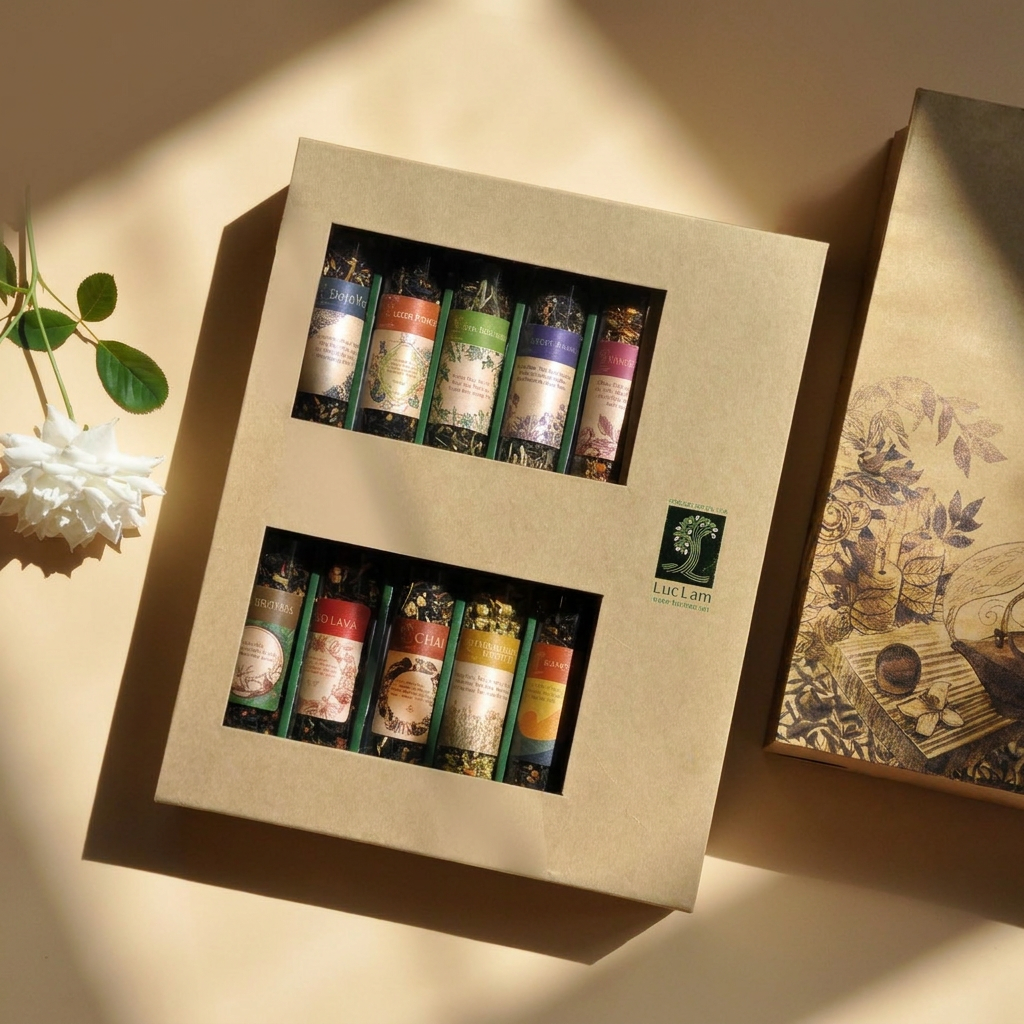
In this context, “decent quality” is defined by the recipient’s experience, not just the price tag. A high-quality hamper uses curated, aromatic blends rather than generic, mass-produced leaves that taste stale or bitter. It features refined packaging that feels substantial in the hand and has a clear design identity. Avoid suppliers who sell identical boxes with only the logo changed, as these often contain lower-grade tea to offset packaging costs. Look for brands that highlight their sourcing and offer a variety of floral and herbal options, signaling that the tea is the star of the gift, not just an afterthought.
How far in advance should I order for a bulk order?
Lead times vary significantly based on the level of customization. For standard, ready-to-ship items, a window of 2 to 3 weeks is usually sufficient to ensure delivery before your deadline. However, if your corporate tea hampers include custom branding—such as bespoke box designs, personalized notes, or custom labeling—you should allow for 4 to 6 weeks. This extra time accounts for production runs, quality control checks, and potential shipping delays. Underestimating this timeline is a common mistake that forces buyers to compromise on personalization or rush-ship, which can detract from the professional impression you are aiming to make.
Conclusion
A 50-unit order is not just a line item in your corporate gifting budget; it is a strategic touchpoint that defines how your clients perceive your attention to detail. The value of Hanoi tea gifts lies not in the unit price, but in the consistent experience each recipient has when they open the box. When the quality aligns with the relationship you have built, the gift reinforces trust. When it falls short, it silently erodes the rapport you have spent months cultivating.
The difference is often found in the specific nuance of “decent quality” in Vietnamese tea—a balance of leaf refinement, packaging elegance, and flavor profile that a generic supplier may miss but a curated partner understands. To ensure your investment yields the desired impact, focus on three pillars: a realistic per-unit ceiling that leaves room for personalization, a supplier who can demonstrate the difference between a standard blend and a refined one, and a timeline that allows for proper customization and logistics. If you are currently drafting your list of 50 names, start by defining your budget tiers. The most effective next step is to identify a supplier who can show you a sample that fits your target range, allowing you to verify the sensory quality before you commit to the bulk gift pricing. This approach ensures that every hamper you send serves as a positive brand reflection, rather than a forgettable expense. If you are ready to begin sourcing, consider reaching out to a specialist in Hanoi who can guide you through the selection and logistics.