On This Page· 5
Ninety percent of recipients recall a branded gift long after the exchange, according to data from the Promotional Products Association International (PPAI). That statistic suggests a strong return on investment for corporate gifting. However, this benefit rests on a fragile premise: the recipient must recognize the item as a meaningful gift, not just another object cluttering their desk. In practice, many corporate tea suppliers in the region struggle to hit this mark. When a purchasing manager requests a large volume of Vietnamese tea gifts, the result is often a uniform box of generic tea bags with a small sticker bearing the company logo. The product is branded, but it is not unique. It lacks the cultural resonance and artisanal quality that trigger long-term recall.
This gap is particularly noticeable in Saigon, where “bulk” is frequently conflated with “uniform.” Many vendors interpret a large order simply as a request for identical, stock-standard items. The customization, if it exists at all, is limited to surface-level changes like a label swap or a printed card. For businesses aiming to build brand equity through thoughtful gifting, this approach undermines the potential impact. A true custom tea packaging solution involves more than just adding a logo; it requires tailoring the product, the presentation, and the narrative to reflect both the giver’s brand and the recipient’s experience.
We set out to define what genuine customization actually looks like in this market. This article breaks down the difference between superficial branding and structural personalization. It also identifies the specific capabilities you should look for in Saigon tea vendors who can handle bulk orders without sacrificing quality or design integrity. The goal is to help you move beyond the sticker-label trap and invest in gifts that truly resonate with your corporate identity.
Why the 67% recall rate only applies to genuinely unique gifts
Research from PPAI indicates that branded gifts generate 67% higher brand recognition than television advertising. For Vietnamese tea gifts, this statistic is often cited to justify large corporate spending. However, the number carries a critical caveat: it assumes the item is remembered and used. If a recipient forgets the gift within a week, the effectiveness drops to zero. The 67% figure is not a guarantee for any product with a logo; it is a reward for items that integrate into the recipient’s daily routine.
The difference between branded and unique
A common mistake in procurement is equating “branded” with “effective.” A gift is simply branded if it carries a logo. It becomes unique when it is culturally resonant, offers high utility, and features thoughtful packaging. Consider the Central Retail Group case study, where the company selected custom-designed handcrafted scented candles for their supplier conference. The result was not just a gift, but a “profound impression of company culture.” The candle was chosen because its scent, design, and presentation told a story about the brand’s values. This logic applies directly to tea.
Narrative over packaging
For Vietnamese tea, uniqueness does not come from a glossy box or a stamped tin. It comes from the narrative of origin and the artisanal nature of the product. When corporate tea suppliers treat the product as a commodity, they strip away the cultural value that makes the gift memorable. A true gift connects the recipient to the source. It highlights the specific region, the traditional methods, and the heritage behind the leaf. This is why custom tea packaging must do more than just display a logo; it must frame the tea as a story worth retelling. If the packaging only shows a logo, you are buying a sticker, not an experience.
Defining the three tiers of tea customization
To move beyond the sticker trap, we apply a framework for uniqueness to the specific context of Vietnamese tea gifts. A gift is “unique” only if it is culturally resonant, highly utilitarian, well-packaged, and distinct from generic stock. In Saigon’s market, vendors fall into three clear tiers based on how they meet these criteria.
Surface-Level Customization is the most common but least effective tier. Here, custom tea packaging is limited to a logo sticker or a printed label affixed to a standard, off-the-shelf box. The interior remains generic, and the recipient receives a product that looks branded but feels mass-produced. This approach satisfies a budget constraint but fails to create the deep connection required for long-term recall.
Structural Customization moves the brand identity into the physical construction of the gift. This includes custom-designed boxes, printed inserts with specific messaging, and unique layout arrangements. The packaging itself becomes a branded asset, not just a container. Recipients interact with the brand from the moment they open the box, creating a tangible connection between the company and the gift’s form.
Experiential Customization is the highest tier, where the gift tells a story. For Saigon tea vendors, this means engraved tea tins, personalized tasting cards that explain the origin, and narrative storytelling about the artisanal process. This level of corporate tea suppliers engagement transforms the item from a commodity into a memory. It aligns with the PPAI data showing that 90% of recipients retain a strong memory of gifts that feel personally crafted and culturally significant, rather than just logo-stamped.
The hidden risks of surface-only vendors
Vendors who only offer surface-level changes on standard stock products present a significant risk for businesses investing in bulk tea orders. When the interior is generic, the “customization” is merely cosmetic. If the box is damaged in transit, the brand identity is lost entirely because the inner packaging provides no secondary layer of branding or protection.
Bulk orders of tea are perishable goods, unlike standard promotional items like pens or mugs. This requires specific attention to shelf life and packaging integrity. Not all Saigon tea vendors can handle the logistical complexity of sealing, moisture-proofing, and storing large volumes of organic herbs over a production period. A vendor who cannot guarantee that the tea remains fresh and the packaging remains intact by the time of delivery is delivering a liability, not a gift. True customization in this sector means the vendor understands that the product’s integrity is part of the brand’s reputation. If the tea is stale or the box is crushed, the 67% higher recognition rate promised by high-quality gifting vanishes instantly. Choose a partner who treats the logistics of Vietnamese tea gifts with the same precision as the design.
3 Saigon vendor archetypes for bulk tea orders with genuine customization
Navigating the landscape of Saigon tea vendors for large-scale procurement requires more than comparing unit prices. The market divides into three distinct operational archetypes, each with different strengths regarding scale, design freedom, and lead times. Understanding where a specific vendor fits helps you align their capabilities with your brand’s gifting strategy. We have categorized these vendors based on how they handle the tension between volume and personalization.
The Artisanal Atelier: Storytelling and design integration
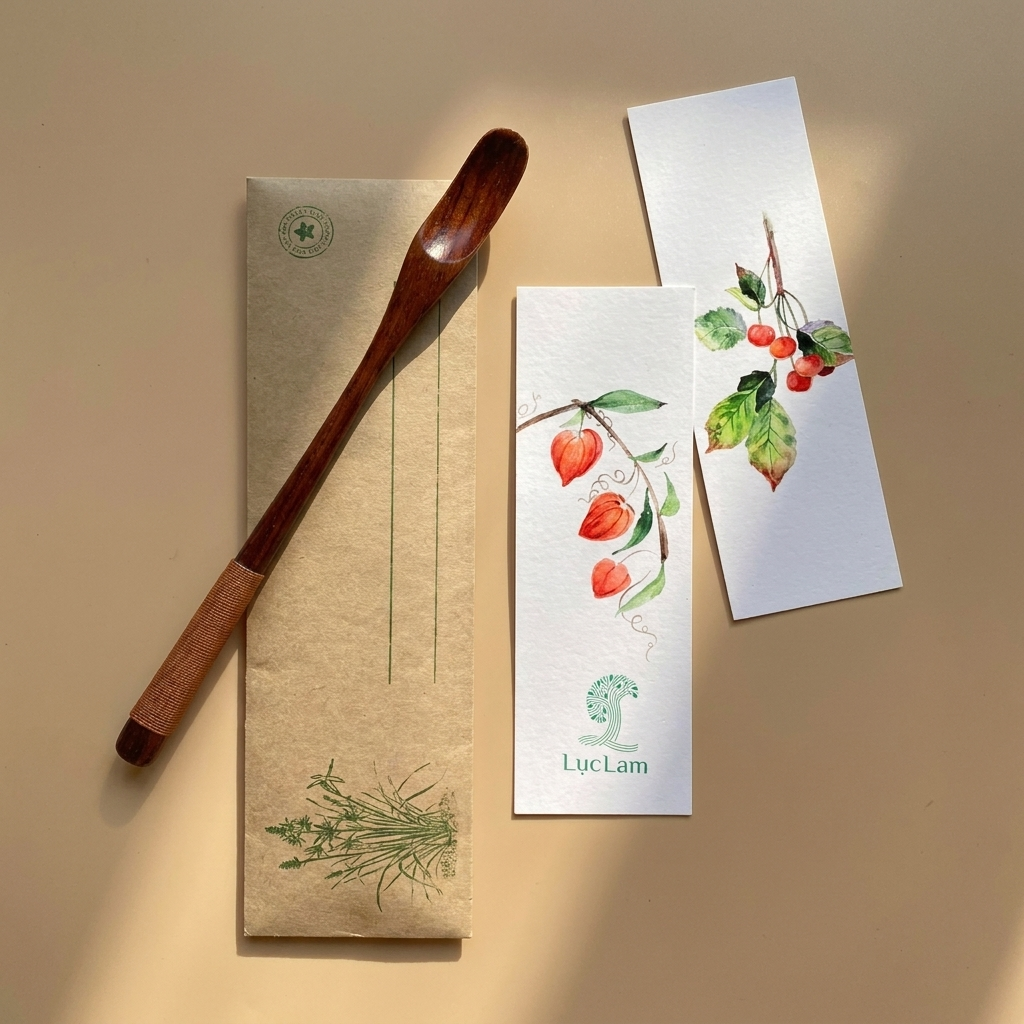
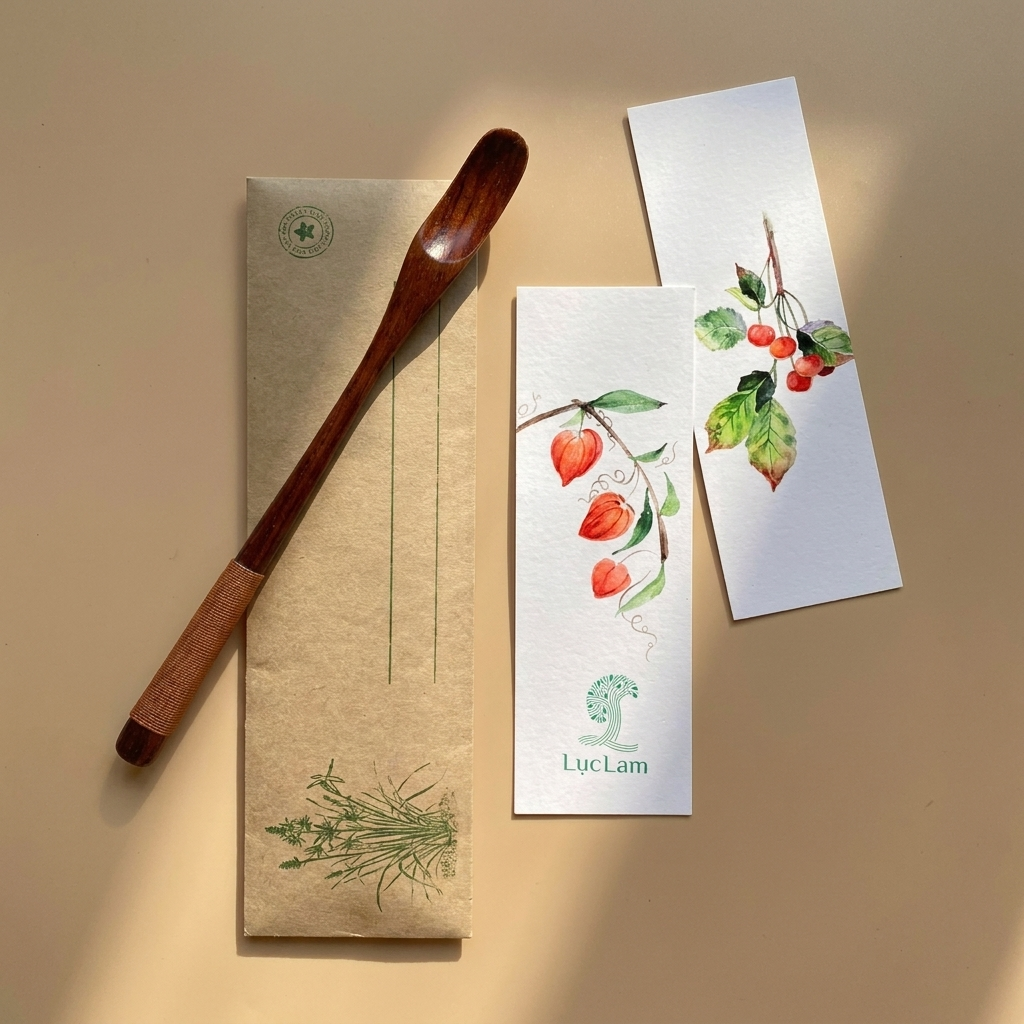
The first archetype is the artisanal atelier, a model well-represented by brands like Lục Lam. These vendors operate at the intersection of manufacturing and creative design. Their core strength is not just the tea leaf, but the narrative wrapped around it. For businesses seeking Vietnamese tea gifts that reflect cultural depth, this is the primary channel.
Artisanal ateliers treat the packaging as an extension of the product. They offer custom packaging design that aligns with your brand identity while preserving the artisanal integrity of the tea. This means the box isn’t just a container; it’s a curated experience that includes origin storytelling, specific blending notes, and high-quality organic herbal teas.
What is included in their standard customization? Typically, you get tailored gift sets designed for corporate gifting, where the contents are selected to create a cohesive theme. The packaging is often re-engineered to fit your brand colors or messaging without compromising the structural integrity of the tea bags or loose-leaf pouches.
What costs extra? Complex structural changes, such as die-cutting new box shapes or adding interactive elements, carry a premium. If you need a unique internal layout that holds a ceramic cup or a specific accessory, this is where you will see line items for structural engineering and prototyping fees.
The Bulk Wholesaler: Scale and speed
The second type is the bulk wholesaler. These operations are built for volume. They often source from multiple regional farms and aggregate supply to meet large orders quickly. Their value proposition is scalability and fast delivery. If your primary metric is moving 10,000 units in under two weeks, this is your partner.
However, their customization options are moderate at best. They excel at surface-level personalization, such as logo printing on existing stock boxes or applying branded stickers to standard packaging. This approach is efficient for large-scale corporate gifting where uniformity is valued over individuality.
Included in their base offering is the ability to handle high-volume logistics and consistent quality control across batches. The tea itself is usually standardized to ensure shelf stability and cost predictability.
Extra charges apply to any deviation from their standard SKUs. Custom colors for the outer carton, specific font types for the label, or mixing different tea blends in a single order often incur setup fees or increased minimum order quantities (MOQs). The flexibility is limited by the constraints of their existing packaging lines.
The Premium Specialty Purveyor: High-end VIP experience
The third archetype is the premium specialty purveyor. These vendors focus on the high end of the market, serving clients who need to impress VIPs or executive teams. Their inventory consists of high-end loose-leaf teas, often single-origin or rare cultivars.
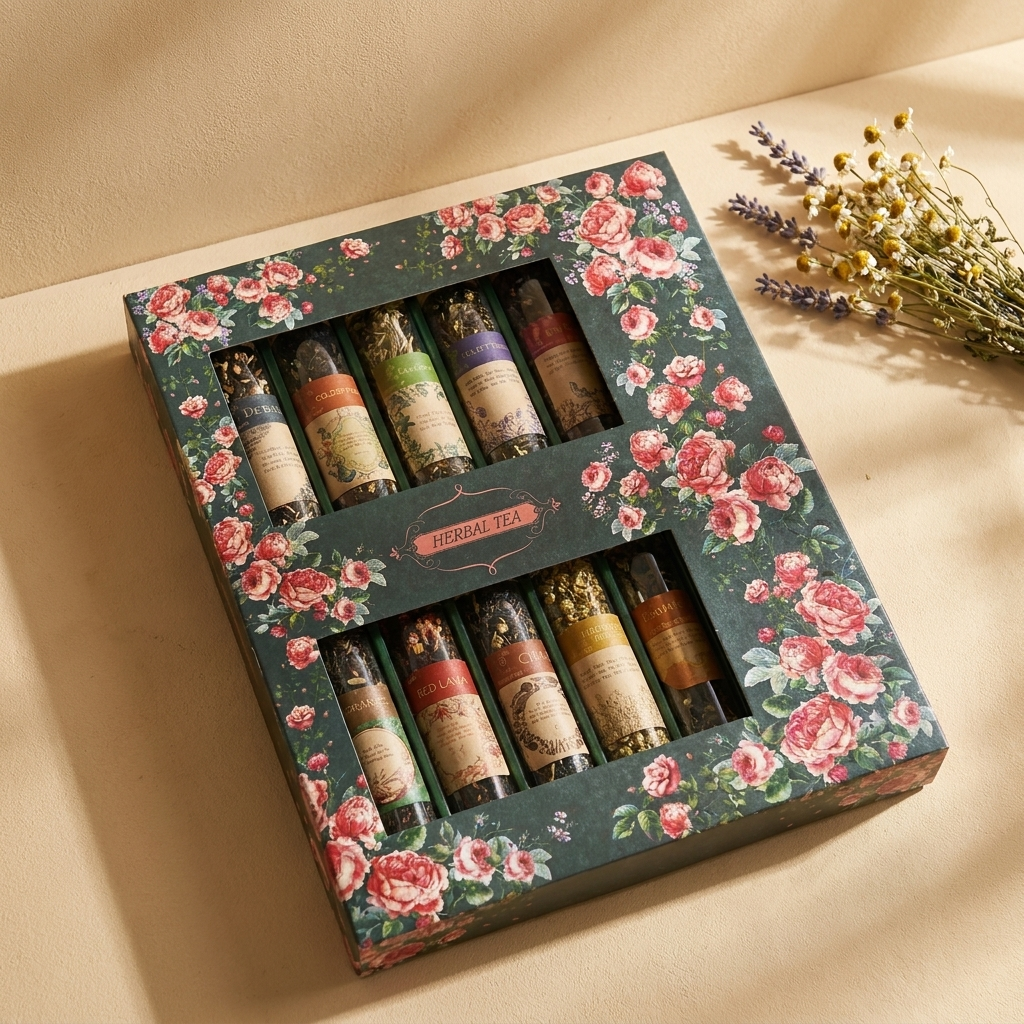
Their customization is experiential rather than just visual. They offer custom engraving on metal tins, personalized tasting cards, and high-end gift box construction using materials like lacquered wood or premium leather. The goal is to create a keepsake, not just a consumable.
For this tier, “customization” includes the artisanal touch on the vessel itself. You might see a tin engraved with a recipient’s name and a specific date, or a box constructed with magnetic closures and silk lining.
The premium here is significant. You are paying for the material quality, the artisanal labor involved in engraving or construction, and the curation of rare tea varieties. This vendor is less about mass distribution and more about high-impact, low-volume gifting where the recipient’s status demands a bespoke approach.
Comparing capabilities and costs
To help you decide which archetype fits your current campaign, here is a breakdown of what is typically included versus what triggers additional costs for each vendor type.
| Feature | Artisanal Atelier | Bulk Wholesaler | Premium Purveyor |
|---|---|---|---|
| Core Strength | Brand storytelling & design | Scalability & speed | VIP experience & materials |
| Included Customization | Themed gift sets, organic blends | Logo on stock boxes, fast delivery | Engraved tins, premium materials |
| Extra Cost Triggers | New box structures, die-cutting | Non-standard colors, mixed SKUs | Rare tea varieties, artisanal labor |
| Ideal Use Case | Annual corporate gifting | Large-scale event giveaways | Executive/VIP client relations |
By mapping your requirements to these three archetypes, you can avoid the common pitfall of asking a wholesaler for artisanal design or an atelier for mass-market pricing. Each model has a logical boundary where its strengths peak and its costs begin to rise.
How to specify custom tea packaging without overpaying
Specifying custom tea packaging requires distinguishing between a logo on a standard box and a bespoke structural design. Without this clarity, bulk tea orders often incur hidden costs or deliver a product that looks generic. To avoid overpaying, start by requesting a visual mock-up before committing to a large volume. This single step reveals whether the vendor is offering a surface-level change or a true structural customization, which drastically alters the production cost and timeline.
Requesting accurate quotes
When contacting corporate tea suppliers, your first interaction should be a precise specification. A vague request for “custom boxes” leads to ambiguous pricing. Instead, use a checklist to frame your inquiry:
- Ask for a 3D mock-up: Do not accept a 2D image. A 3D render shows how your logo interacts with the box folds and handles.
- Clarify the interior: Confirm if the tea bags or leaves inside are also branded. If you are paying for a premium outer box, generic inner packaging creates a jarring experience that undermines the gift’s value.
- Define the material: Specify if you want rigid card, eco-friendly kraft, or a premium matte finish. Material costs vary significantly and are often where budgets balloon.
By being specific, you prevent the vendor from quoting a high-end specification when you only need a moderate one, or vice versa.
Minimum order quantities and lead times
There is a direct trade-off between the depth of customization, the minimum order quantity (MOQ), and the lead time. Surface-level branding, such as a printed label or sticker, has a low MOQ and a fast turnaround of 3–7 days. This is suitable for urgent needs but offers limited brand differentiation.
True structural customization involves designing a box from scratch. This typically requires a higher MOQ because the cost of creating the printing plates and die-cuts must be spread across more units. The lead time for structural work is 2–4 weeks, as the design must go through proofs and physical sampling before full production. If your event is in two weeks, a custom-designed box is likely not feasible; a high-quality stock box with professional printing is the realistic option.
Comparing customization tiers
To make an informed decision, compare the three main tiers of customization based on cost, time, and impact.
| Criteria | Surface Customization | Structural Customization | Experiential Customization |
|---|---|---|---|
| Description | Logo on stock box or label | Bespoke box design and structure | Engraving, personalized inserts, storytelling cards |
| Lead Time | 3–7 days | 2–4 weeks | 3–5 weeks |
| MOQ | Low (100–500 units) | Medium (500–1,000 units) | Medium (500–1,000 units) |
| Impact | Moderate brand visibility | High perceived value | Maximum emotional connection |
Common questions about bulk Vietnamese tea gifts
Procurement managers rarely have a dedicated channel for asking niche questions about tea, so we pulled together the four queries that come up most often when planning corporate gifting programs in Saigon. These answers reflect standard practices among reputable Saigon tea vendors and can help you avoid last-minute surprises.
Invoicing and compliance
Q: Can I get VAT invoices for bulk tea orders in Saigon?
Yes. Reputable corporate tea suppliers issue full VAT (value-added tax) invoices for all orders, including single transactions. This is critical for expense tracking and audit compliance. However, you should verify this explicitly during the quote stage. Some smaller, informal sellers may only provide simple receipts rather than official VAT documentation. Confirming this early prevents administrative headaches later, especially when submitting claims for corporate tea suppliers’ services.
Lead times for customization
Q: How long does it take to produce custom tea packaging?
It depends on the level of customization. Surface-level changes, such as applying a logo sticker or label to a pre-made box, typically take 3–7 days. Structural customization, which involves designing and producing a new box from scratch, usually requires 2–4 weeks. If your timeline is tight, decide early whether you need a new physical form or just branding on an existing structure, as this dramatically affects the schedule.
Selecting the right tea
Q: What is the best tea for corporate gifting?
Organic herbal teas are often the top choice for business settings. Varieties like lotus, jasmine, or other local specialties carry cultural significance and offer universal appeal without the risk of caffeine sensitivities that some recipients might have. Because these Vietnamese tea gifts are caffeine-free, they are suitable for a wider range of recipients, including those who avoid stimulants. This makes them a safer, more inclusive option for corporate tea suppliers’ gift programs.
Mixing product types
Q: Can I mix different tea types in one bulk order?
Most vendors allow you to combine different tea varieties in a single bulk order. However, doing so may affect the uniformity of the packaging design. If you want a consistent visual identity across all units, sticking to one or two similar product formats is usually easier to manage. Mixing multiple types requires careful coordination to ensure each unit looks intentional rather than mismatched. Discuss your specific mix with the vendor to see how it impacts the final presentation.
The difference between a logo and a memory is not just design; it is the narrative woven into the product itself. When you invest in Vietnamese tea gifts, the goal is to create an experience that resonates with your audience long after the wrapper is opened. A simple sticker on a generic box is easily discarded, but a thoughtfully crafted set that tells a story about origin and craftsmanship becomes part of your brand’s identity.
Hitting that 67% higher brand recognition rate is not about spending the most, but about choosing a partner who understands both the logistics of scale and the subtlety of artisanal detail. Whether you are dealing with the specific shelf-life requirements of bulk orders or the intricate requirements of custom tea packaging, the right vendor ensures that every element—from the tea leaves to the final presentation—works together to make a lasting impression. As you review your current sourcing strategy, consider whether your gifting program is actually building a brand or simply distributing products, and reach out to partners who can help you bridge that gap.