On This Page· 5
You are staring at a fixed business gift budget for 50 key partners, and the decision is no longer about what looks nice—it is about where the money goes. You have two options on your desk: a mid-range hamper priced at ₹1,999 and a luxury set listed at ₹3,999. On the surface, the luxury option looks polished. But the real question is whether that 2x price tag actually buys double the value, or if it is just a higher cost for a slightly nicer box. For corporate tea gifts, this gap is the single biggest lever in your bulk gift pricing strategy. If you choose the higher tier, your total spend jumps by 100% instantly. If you choose the lower tier, you save nearly 50% of the cost. This article breaks down exactly how that 2x premium plays out across a 50-unit order, what you get for the extra money, and whether a mixed approach might work better for your business gift budget than going all-in on one tier.
The 2x Premium: How Luxury Tea Hampers Are Priced
When planning corporate tea gifts, the most significant budget decision is often the jump from mid-premium to luxury tiers. This is not just about choosing a nicer box; it is a structural shift in unit cost that can double your total expenditure. For a 50-unit order, this premium is not a minor adjustment—it is the central financial factor defining your budget.
Anchoring the Price Difference in Reality
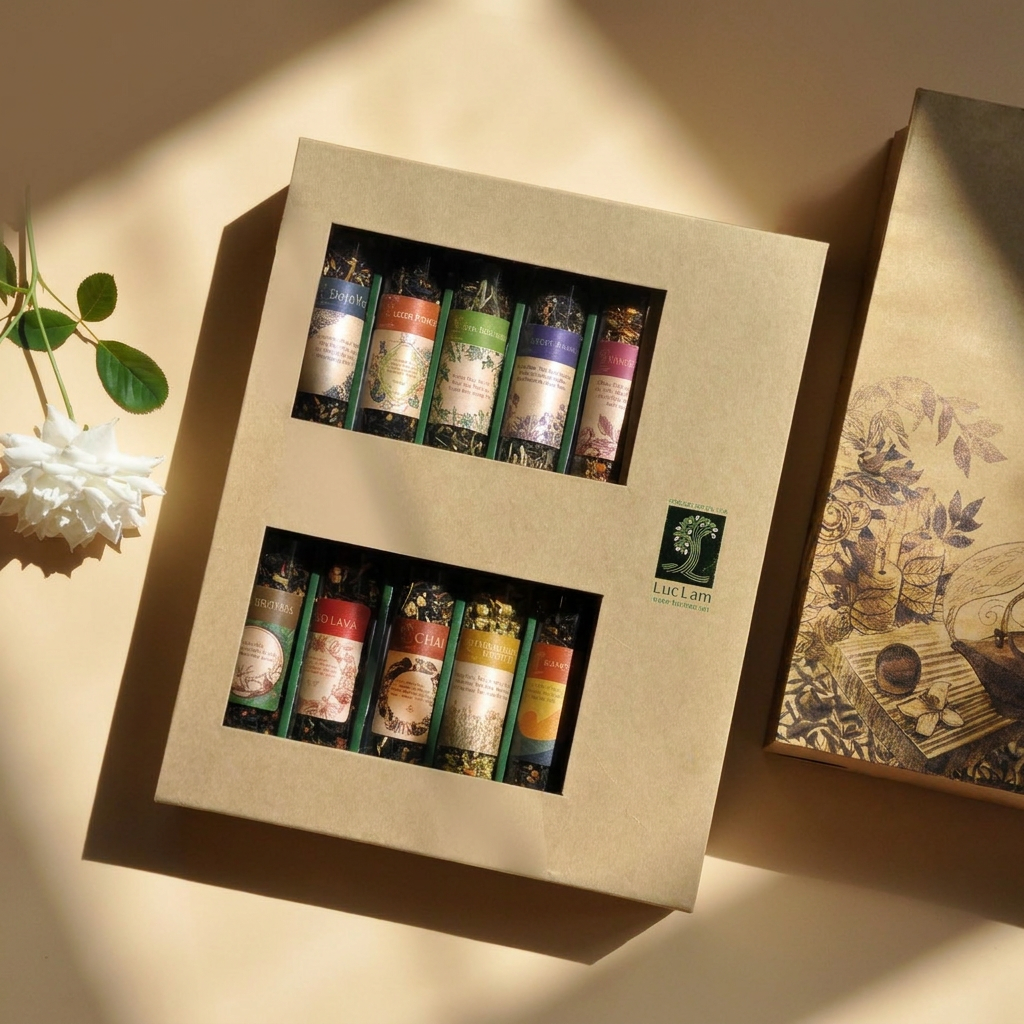
To understand the magnitude of this cost jump, consider two specific product benchmarks often used in the industry. The Copper Sip Hamper sits at ₹1,999 per unit. It is a refined, functional gift that includes a premium copper vessel and curated beverages. This serves as the mid-premium anchor for many gifting programs. On the other end of the spectrum is the Signature Box Black, priced at ₹3,999 per unit. This is a flagship luxury piece designed to make a stronger statement of appreciation and brand prestige.
The difference between these two items is exactly ₹2,000 per unit. In percentage terms, the luxury option costs twice as much as the mid-premium option. This 2x multiplier is a common pattern in the luxury tea hampers category, where the move to the “luxury band”—typically defined as pricing 2.5x or more above the entry-level items—creates a distinct psychological and financial gap.
The Cumulative Impact on a 50-Unit Order
While a ₹2,000 difference might seem manageable for a single gift, the math changes when you multiply by the volume of a corporate order. For a team of 50 business partners, the total cost for the mid-premium tier is ₹99,950 (50 × ₹1,999). For the luxury tier, the total rises to ₹199,950 (50 × ₹3,999). The additional spend required to upgrade the entire cohort to the luxury tier is ₹100,000.
This is where bulk gift pricing becomes a critical lever in your planning. The key takeaway is that the luxury label carries a 100% premium in unit cost, which translates to a significant total budget difference when comparing the entire order value. Before proceeding, determine whether that extra ₹100,000 buys a proportional increase in recipient satisfaction, or if it is better deployed through a tiered strategy later in the process.
Calculating the Per-Unit Impact on Your 50-Unit Budget
When you multiply the unit price by your order volume, the financial gap between tiers becomes immediately apparent. For a standard 50-unit corporate tea gifts order, the difference is not just a percentage—it is a significant absolute sum that directly impacts your business gift budget.
The Base Cost Comparison
To see the raw difference, we look at the two anchor points: the Copper Sip Hamper at ₹1,999 and the Signature Box at ₹3,999.
| Tier | Product | Unit Price | Total for 50 Units |
|---|---|---|---|
| Mid-Premium | Copper Sip Hamper | ₹1,999 | ₹99,950 |
| Luxury | Signature Box | ₹3,999 | ₹199,950 |
The additional spend for the luxury tier is exactly ₹100,000. This is the core financial tension: choosing the higher tier effectively doubles your total expenditure for the same number of recipients. If your budget is fixed, this ₹100,000 difference might mean halving the number of gifts or reallocating funds from other departments. Understanding this base cost is the first step in managing bulk gift pricing for a large team.
Applying the Bulk Discount Logic
However, the list price is rarely what you actually pay. Most corporate gifting providers offer volume discounts to incentivize larger orders. For the 25–99 unit tier, a standard 10% discount is typically applied. This changes the “net” per-unit cost, which is the true figure you should use for your final budget approval.
Let’s apply this 10% reduction to both scenarios:
- Mid-Premium Tier: A 10% discount on ₹1,999 reduces the cost by ₹199.90, bringing the net price to ₹1,799.10 per unit. The total for 50 units becomes approximately ₹89,955.
- Luxury Tier: A 10% discount on ₹3,999 reduces the cost by ₹399.90, bringing the net price to ₹3,599.10 per unit. The total for 50 units becomes approximately ₹179,955.
You might assume that because the discount percentage is the same, the savings are equivalent. In reality, the absolute savings on the luxury tier are double those of the mid-premium tier (₹399.90 vs. ₹199.90 per unit). Yet, even after this deduction, the final per-unit price of the luxury set remains precisely twice that of the mid-premium option. The 2x multiplier holds true both before and after the discount, which is a critical insight for anyone comparing premium tea sets for corporate events.
What You Actually Get for the Extra Cost in Luxury Tea Hampers
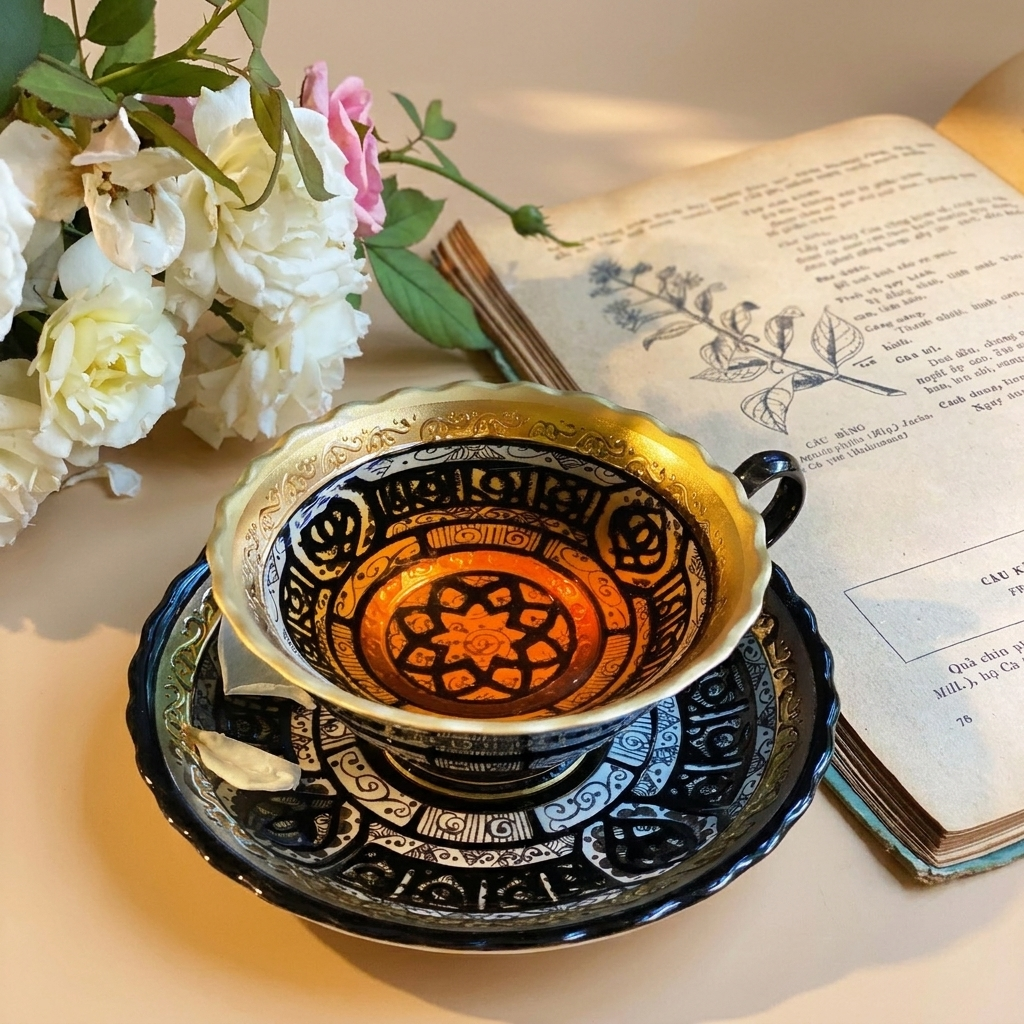
The jump from the Copper Sip to the Signature Box is not just a color change. It is a shift in the physical materials and the tier of the tea itself. The mid-premium tier prioritizes functional quality, featuring a durable copper vessel designed for daily use. The luxury tier, however, upgrades to premium vessel materials, often incorporating crystal elements or gold accents that elevate the unboxing experience. The tea origins inside the luxury hamper are also typically higher-grade, moving from standard curated blends to more specialized, high-altitude varieties. This material distinction is the core of the price gap: you are paying for visual prestige and sensory refinement, not just a larger volume of tea.
Perception versus Utility
When a recipient opens a luxury tea hamper, the immediate signal is status. Does a double price tag genuinely signal double thoughtfulness, or does it simply look more expensive? For a key client or a C-level executive, the luxury presentation often reinforces the relationship by mirroring their own professional stature. However, for a broader team or a new acquaintance, a high-end item can sometimes feel intimidating or overly formal. A mid-premium gift often feels more approachable and less transactional, signaling that you value the person’s daily comfort rather than their social status. The perception value is highest when the gift’s prestige matches the recipient’s role in your business ecosystem.
The Keepsake Trade-Off
Luxury items are often keepsakes, while mid-premium items are utilitarian. A crystal set or a gold-accented vessel is likely to stay in a display cabinet, serving as a constant visual reminder of your brand. In contrast, a copper vessel or a standard high-quality mug is an item that gets used. It sits on the desk, holds a daily cup of tea, and wears the patina of regular use. For business gift budget planning, this is a critical trade-off. If your goal is long-term brand visibility on their desk, utility wins. If your goal is a memorable moment of prestige at the point of receipt, luxury wins. Many procurement managers find that the luxury tier creates a “wow” factor that justifies the extra cost, provided the recipient is in the top tier of your client list.
Tiered Gifting: The Middle Path
Buying 50 identical luxury tea hampers is rarely the most efficient use of a business gift budget. Instead, consider a tiered strategy that balances broad recognition with targeted impact. This approach uses the mid-premium Copper Sip Hamper for the majority of your recipients—say, 40 units—while reserving the luxury Signature Box for your top 10 VIP clients. By concentrating the premium spend on key stakeholders, you ensure the most critical relationships receive the highest tier without inflating the total cost of the entire order.
Maximizing Perception per Rupee
This split strategy maximizes the “perception per rupee” for your business gift budget. The logic is straightforward: a VIP client expects a distinct level of attention, while a broader network of colleagues or secondary partners values thoughtful, high-quality consistency. By upgrading only the top tier, you signal special consideration to those who matter most strategically, rather than diluting the budget across everyone. This ensures that the luxury tea hampers serve their purpose as a status marker, while the mid-premium sets maintain a strong brand presence for the rest of the group.
The Scenario Calculation
To see the difference, compare three scenarios based on the 10% bulk discount for 25–99 units:
| Strategy | Unit Mix | Calculation | Net Total Cost |
|---|---|---|---|
| All Mid-Premium | 50 × Copper Sip | 50 × (₹1,999 × 0.90) | ₹89,955 |
| All Luxury | 50 × Signature Box | 50 × (₹3,999 × 0.90) | ₹1,79,955 |
| Tiered | 40 × Copper Sip + 10 × Signature Box | 40 × (₹1,999 × 0.90) + 10 × (₹3,999 × 0.90) | ₹1,07,949 |
The tiered approach costs significantly less than the all-luxury option (saving roughly ₹72,000) while still delivering the premium experience to your most important clients. It offers a balanced solution for corporate tea gifts, ensuring your premium tea sets are reserved for those who will value them most, without overextending your budget.
Frequently Asked Questions About Bulk Gift Pricing for Tea Hampers
Many procurement teams hesitate to commit to a mixed-tier strategy because they fear losing volume discounts. The short answer is that you do not lose any savings by combining different premium tea sets in a single purchase. Most vendors, including The Happiness Story, explicitly allow mixed orders. The bulk discount is typically applied to the total order value or calculated per item, meaning you receive the same rate regardless of the mix. For example, if you combine 30 units of the Copper Sip Hamper and 20 units of the Signature Box Black, the 10% discount for the 25–99 unit tier applies to the combined total. This flexibility is crucial for implementing a tiered gifting strategy without inflating your costs.
Verifying the ‘Luxury’ Feel Before You Buy
Before committing a business gift budget to 50 units of a high-end set, you should never rely solely on product images. A physical sample of any hamper is available for approval before the bulk run is confirmed. This step is critical for verifying the tactile quality of the packaging and the weight of the vessels. For larger orders of 100+ units, free sampling is available, which removes any financial risk from the evaluation process. For smaller orders, samples are often provided for a small fee. This allows you to assess whether the luxury tier genuinely delivers a superior experience for your VIP clients or if the mid-premium option offers better utility for the general team. Using a sample ensures that your selection aligns with the recipient’s expectations before you finalize the 50-unit order.
Understanding Minimum Order Quantities for Premium Sets
A common misconception is that luxury tea hampers require a higher minimum order quantity (MOQ) than standard items. This is not the case. The MOQ for bulk corporate gifting is 25 units across all product tiers. You can order just 10 luxury sets if you wish, but you will not qualify for the 25-unit volume discount. Since 25 units is the threshold for the 10% discount, you must reach that number to unlock the reduced rate. If you only need 10 high-end gifts, you will pay the standard per-unit price for those specific items. The most efficient way to stay within a fixed budget while ensuring VIPs receive top-tier gifts is to mix tiers. By combining a few luxury sets with enough mid-premium items to reach the 25-unit minimum, you secure the discount while still differentiating your key stakeholders.
The decision between a mid-premium option and a luxury set ultimately comes down to the relationship you hold with each recipient. For a general team or broad client base, a quality functional hamper delivers sufficient value and maintains a professional standard. However, for key stakeholders or VIPs, the higher-tier set signals the specific weight of that partnership. The financial gap is significant, but it is manageable when you segment your list rather than applying a single price point to everyone. This approach ensures that your most critical relationships receive the extra attention they warrant without depleting your entire business gift budget. By balancing the tiers, you turn a fixed cost into a strategic allocation of goodwill. If you are unsure how to split your 50 units or which products fit your specific client profile, consider reaching out to a gifting expert for tailored advice.