On This Page· 6
You find the perfect herbal blend online, ready to click “Buy Now,” and then hit a wall: you need a business account, or you must order at least 25 pounds to qualify for the displayed price. For a home herbalist or a boutique tea shop, that barrier can shut the door before the first cup is even brewed. Yet a different model has emerged, one where a 1/4 lb or 1 lb order of bulk herbal tea receives the same wholesale pricing as a large distributor. This shift changes how small buyers access high-quality ingredients without carrying inventory risk. Here, we map the right purchasing model to your specific needs, whether you are buying for personal use, a small business, or serious resale.
The Two Faces of Bulk Herbal Tea Sourcing
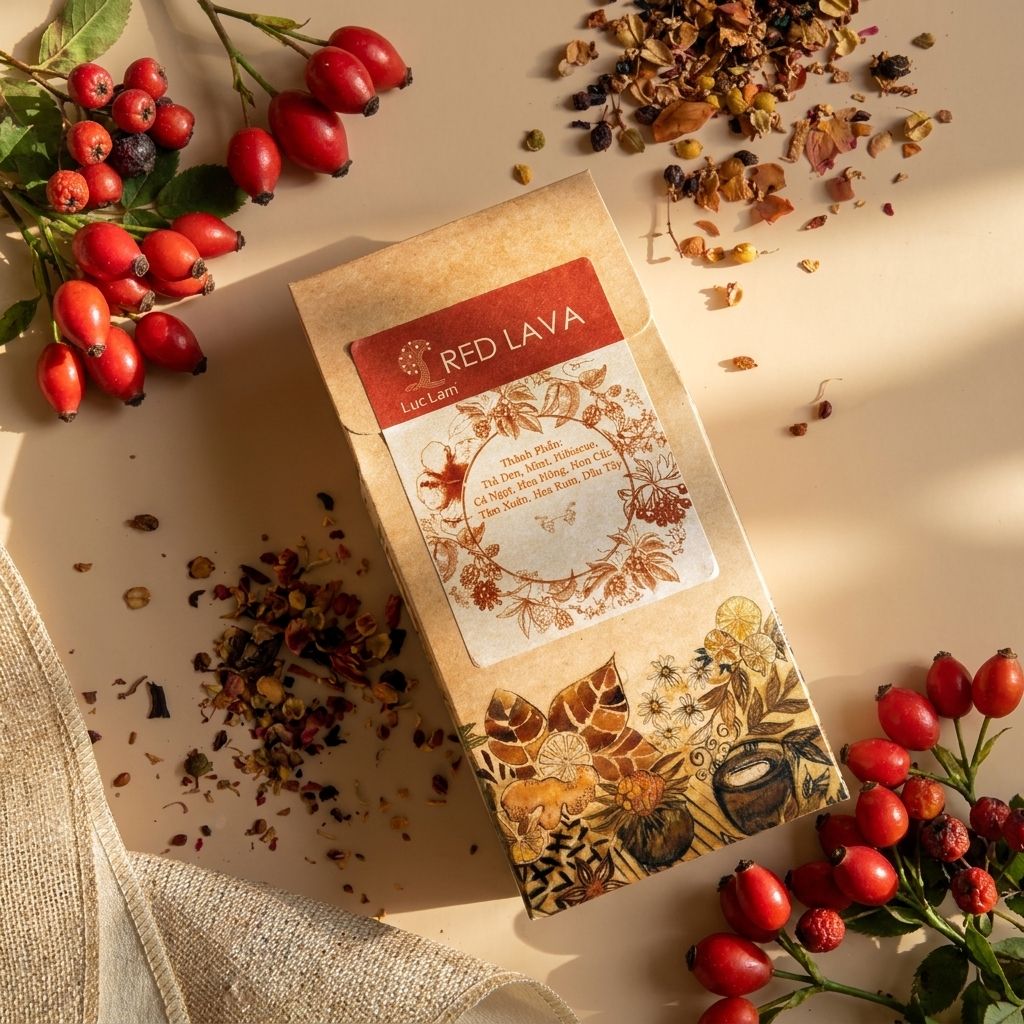
Buying bulk herbal tea used to mean standing at a warehouse door with a business license in hand. Today, that gate is often open, allowing anyone to access wholesale pricing. Understanding the difference between these two models is the first step toward smarter purchasing.
The Traditional Account Gate
The classic wholesale model requires a registered business entity. Suppliers enforce high minimum order quantities (MOQs), often ranging from 25 to 50 pounds or more. In exchange, you receive tiered pricing based on your projected annual volume. This structure prioritizes large, consistent buyers and effectively locks out individuals or micro-businesses that cannot commit to those upfront costs.
The Open No-Minimum Model
In contrast, the open model removes the administrative barrier. You do not need a business account to shop. Instead, you can purchase small quantities, such as a 1/4 lb or 1 lb order, at the same wholesale rates a large distributor would pay. This approach treats every customer equally, whether they are brewing at home or running a boutique shop. An online tea supplier using this method lets you start small and scale up only after you have tested the products.
Why the Distinction Matters for Cash Flow
For travelers or small gift businesses sourcing traditional Vietnamese tea, this distinction impacts risk. Buying 50 pounds of a specific blend when you only need five units creates significant inventory risk. If the tea does not sell or your preferences change, you are left with expensive stock. The no-minimum model protects your cash flow by allowing you to buy just what you need, when you need it. You avoid the “gate” of high MOQs and keep your working capital available for other business needs.
Access Barriers: Gate vs. Open Cart
The core difference is simple: access. The traditional model asks, “Do you have the paperwork?” The open model asks, “What do you need?” This shift changes how you evaluate suppliers. You are no longer limited by the supplier’s view of your business size; you are empowered by the flexibility to buy exactly the amount that fits your current demand.
Anatomy of a No-Minimum Tiered Pricing Structure
Wholesale herbal blends are no longer gated behind complex business accounts. A prime example is Monterey Bay Herb Company, a U.S.-based supplier that has operated since 1997. They sell herbs and teas in bulk quantities, but the entry point is surprisingly accessible: 1/4 lb to 1 lb.
This specific structure allows a home user to buy a small sample and receive the same wholesale per-unit cost as a large distributor. The pricing tiers are straightforward and designed to reward volume without requiring long-term commitments.
Unlocking Discounts Without Commitment
The key feature of this model is the “quote for deeper discounts” mechanic. If a buyer needs 100 lbs or more of a single item, they can request a custom quote to unlock lower per-unit costs. This is a powerful tool for those who need large quantities of a specific ingredient but do not want to commit to a standing order or a formal wholesale account. It provides the flexibility of a spot transaction with the pricing benefits of bulk purchasing.
Logistics and Delivery Speed
Another critical advantage of using a specialized online tea supplier with dual-warehouse operations is speed. Monterey Bay Herb Company ships from locations in both California and Iowa, allowing them to deliver orders within two business days. This is a significant contrast to smaller, single-origin specialty shops, which often have slower shipping times due to centralized inventory. For buyers who are testing new products, fast delivery means you can move quickly from trial to scaling up your order volume if the product performs well in your market or for your personal use.
Benefits for Small Buyers
This structure is particularly beneficial for small businesses and individual herbalists who need to test the waters before committing to larger inventories. You can start with a 1 lb order to check the quality and consistency of the blend. If it meets your standards, you can scale up to the 100+ lb threshold to reduce your costs. This low-risk approach protects your cash flow and ensures that you are only investing in products you know will sell or that you will actually use. For anyone sourcing bulk herbal tea, this tiered system offers a clear path from experimentation to profitability.
Wholesale Herbal Blends for Gifting: Vietnamese Tea Context
Buying bulk herbal tea for personal consumption is one thing; selecting it as a gift for a colleague or a business partner is another. For travelers visiting Vietnam, the challenge shifts from “Will this taste good?” to “Does this look appropriate?”
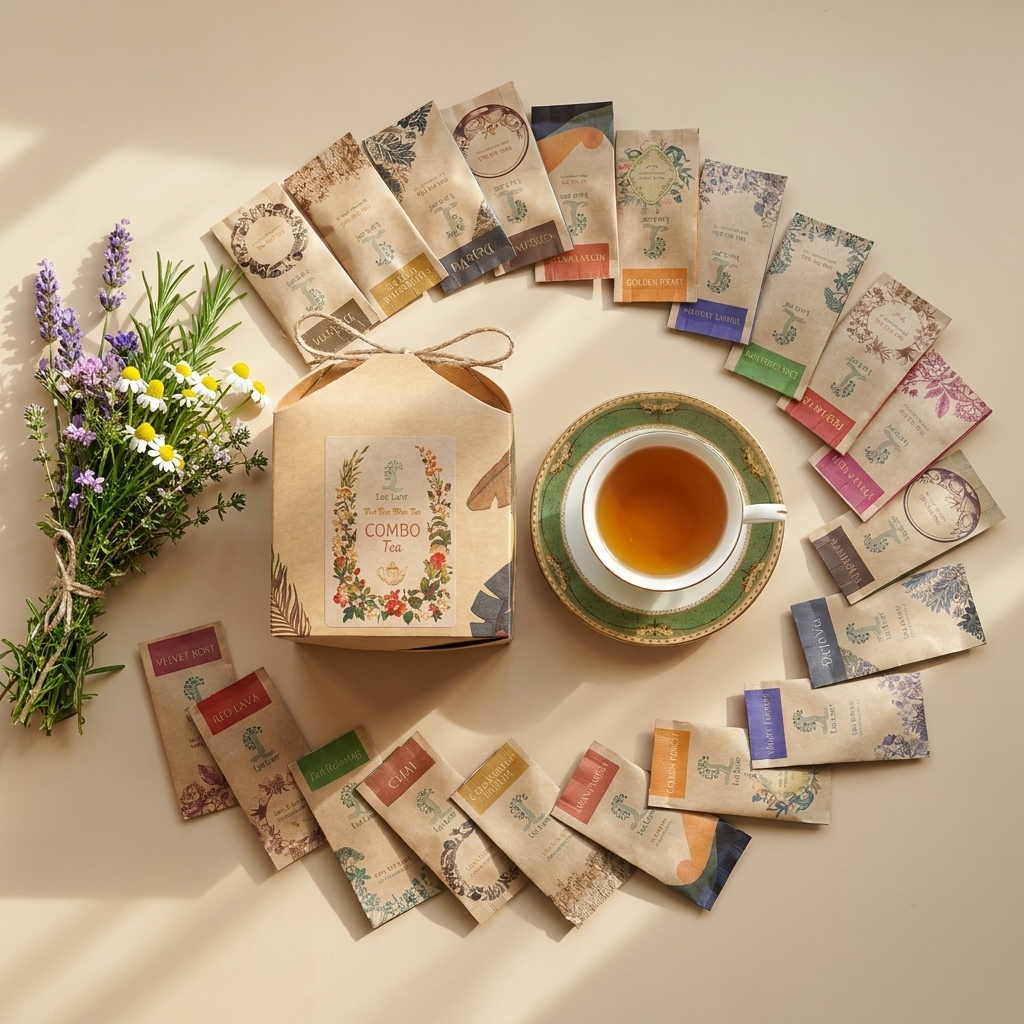
In the gifting context, easy to choose and refined packaging become the primary decision drivers. A recipient in Japan or Taiwan expects a gift that signals respect and care. A plain jar of loose leaves, while functional, lacks the narrative and presentation layer that makes a gift memorable. This is where the distinction between raw ingredients and curated products becomes critical.
The Gap Between Home Brewing and Gift-Giving
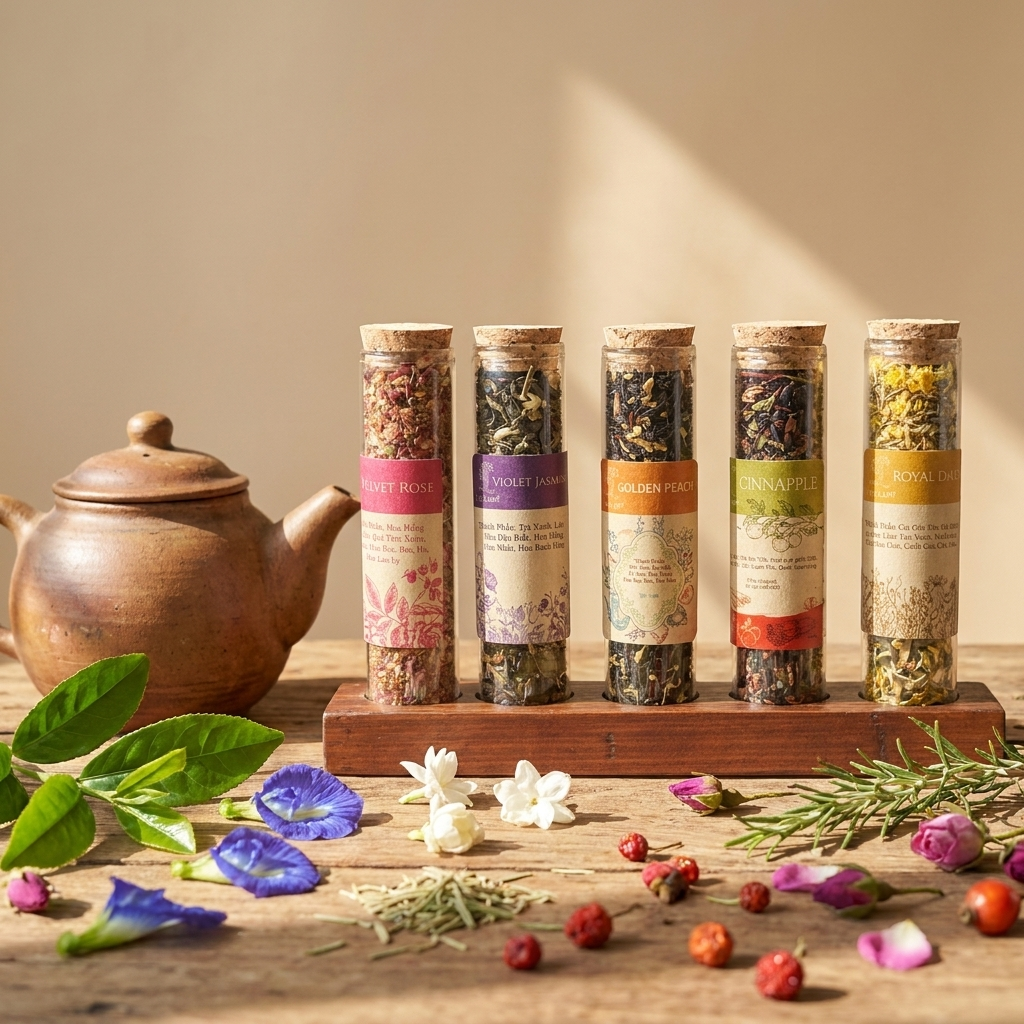
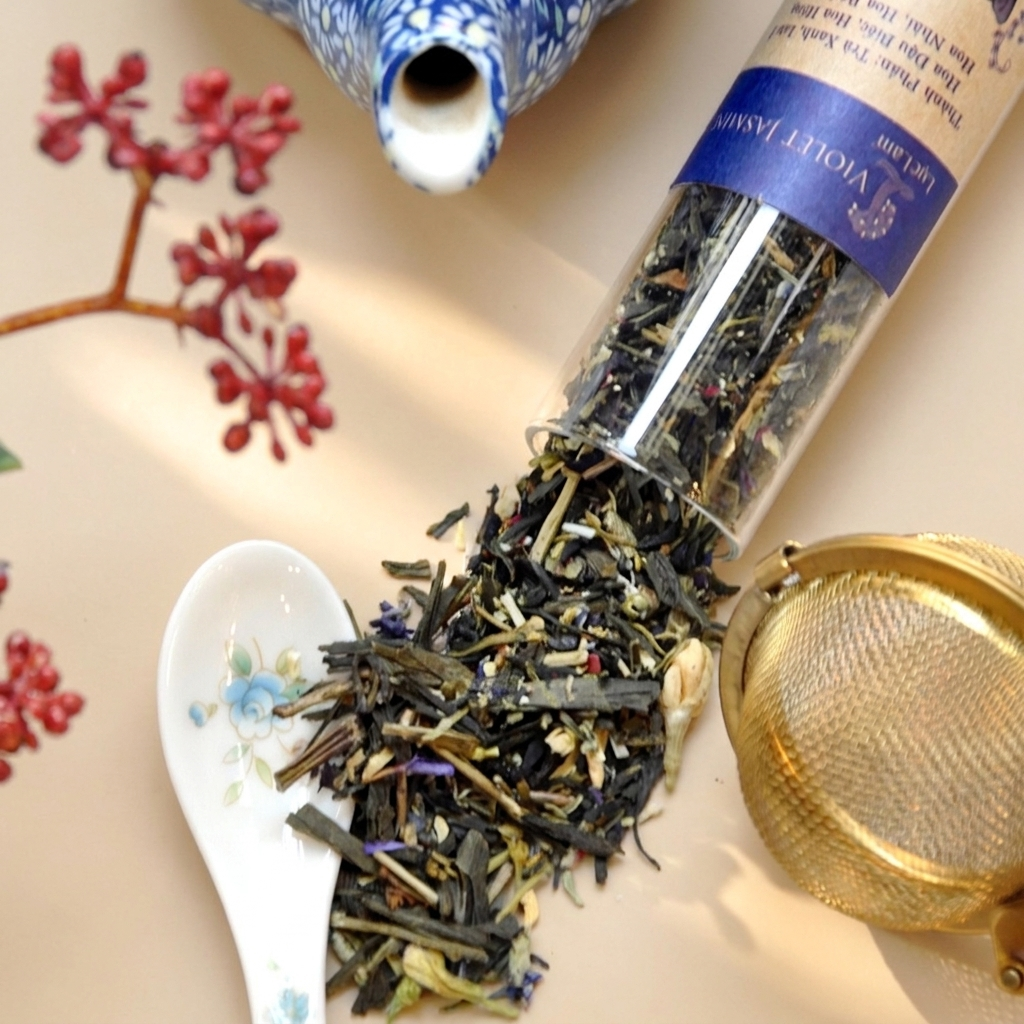
There is a fundamental difference between buying wholesale herbal blends for your own kitchen and buying them for someone else. When you brew for yourself, you prioritize flavor profile and potency. You are willing to handle raw bulk leaves, measure them with a spoon, and steep them in your own teapot. The convenience factor is low; the outcome is what matters.
For gifting, the dynamic flips. The recipient does not want to perform the labor of brewing. They want a complete experience. A pre-packaged, artisanal tea set removes the friction of preparation. It communicates that the giver has already curated the experience. This is why travelers often bypass bulk bins in favor of ready-made, individually packed options.
Why Curated Sets Win for Travelers
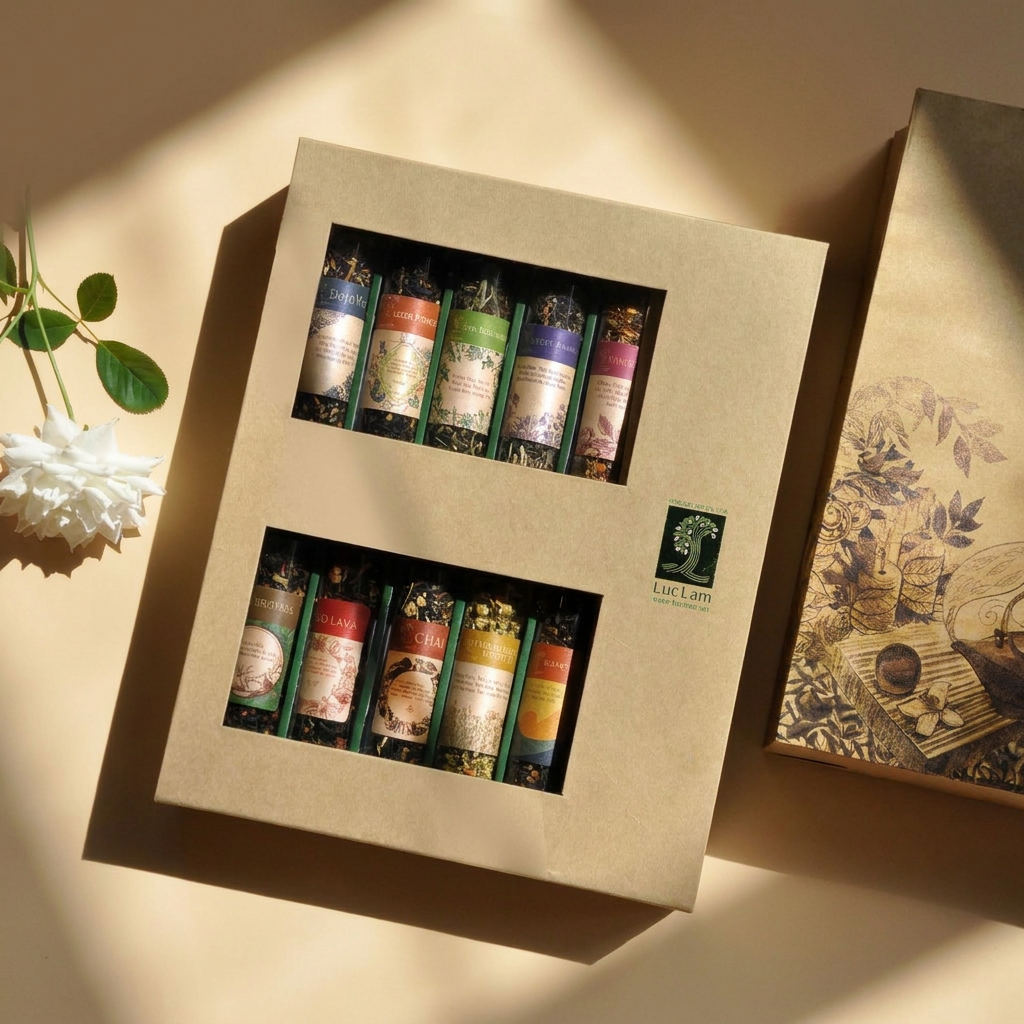
While the no-minimum model is excellent for sourcing raw ingredients at wholesale prices, it rarely solves the gifting equation. A traveler has limited time and a high need for visual appeal. This is where brands like Lục Lam fill a specific gap. They offer curated gift sets that balance traditional flavors with modern, refined packaging. These sets are designed to be unboxed and enjoyed immediately, making them suitable for gifting to family, friends, or business partners without the risk of a “plain” impression.
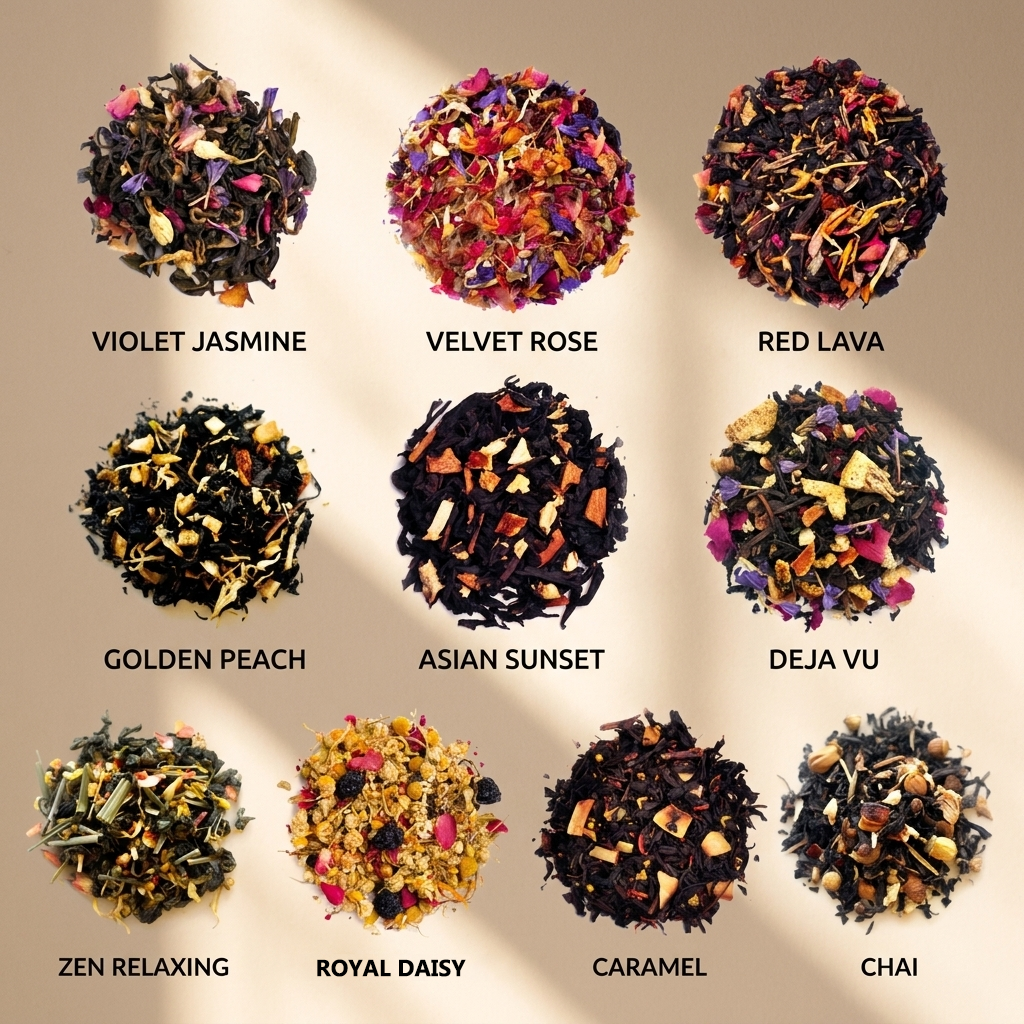
The variety matters here. A box containing ten different flavors allows the recipient to explore different profiles without committing to a single taste. This turns a simple drink into a discovery journey, which is a more thoughtful gesture than a single, large quantity of one blend.
Certifications for Serious Resellers
If you are not just buying for personal gifts but acting as a reseller or corporate buyer, the criteria expand. For serious resellers, checking third-party certifications is a key differentiator when choosing an online tea supplier. Look for marks of quality such as SQF, GMP, or Organic certification. These badges do not just reassure the end-user; they protect your brand. They signal that the traditional Vietnamese tea you are distributing meets international safety and quality standards, which is crucial when sending gifts to partners in Japan, China, or Taiwan.
Ultimately, the right model depends on your role. If you are buying for your own shelf, the no-minimum bulk model offers flexibility and low risk. If you are buying to impress, the curated, certified gift set offers the prestige and convenience that a thoughtful gift requires.
Comparing Models: Home User vs. Small Business vs. Reseller
Choosing the right sourcing strategy for bulk herbal tea depends entirely on your volume needs and risk tolerance. A home user and a serious reseller have opposite incentives: one wants low financial exposure to explore flavors, while the other demands maximum margin and reliable logistics.
| User Type | Typical Order Size | Primary Goal | Recommended Model |
|---|---|---|---|
| Home User | 1/4 lb – 1 lb | Taste testing & personal use | No-Minimum / Open Cart |
| Small Business | 10 – 50 lbs | Inventory rotation & product testing | Hybrid (No-Minimum + Bulk Quote) |
| Reseller | 100+ lbs | Margin maximization & consistent supply | Wholesale Account / 100+ lb Quote |
The Home User: Low Risk, High Exploration
For individuals buying traditional Vietnamese tea for personal consumption or small gift exchanges, the no-minimum model is ideal. You can purchase 1/4 lb units of different blends without committing significant capital. This approach lets you evaluate quality and taste directly before scaling up. Since you are not competing on volume, focus on the purity of the ingredients rather than per-unit cost savings. The ability to switch between a jasmine blend and a ginger-infused herbal mix in the same order is a key advantage here.
The Small Business: The Hybrid Approach
Small tea shops or boutique gift retailers operate in the middle. Using a strict wholesale account can tie up cash in inventory that may not sell. Instead, use the no-minimum structure to test new herbal blends or seasonal offerings. Once a specific product proves itself as a bestseller, switch to a bulk quote or a standard wholesale order for that item only. This hybrid method lowers your per-unit cost on proven inventory while keeping your overall cash flow flexible. It is a practical way to manage inventory risk for a growing client base.
The Reseller: Scale and Logistics
Serious resellers dealing in large volumes of wholesale herbal blends need the traditional account model or the 100+ lb quote tier to achieve viable margins. At this scale, the primary concern shifts from taste to logistics and compliance. You need a supplier that can guarantee delivery times, especially for time-sensitive corporate gifting campaigns. Always verify if the supplier offers dual-warehouse shipping—such as having stock in both California and Iowa—to ensure 2-business-day dispatch regardless of your location. Additionally, for resellers, documentation is paramount. Ensure the provider offers third-party certifications like SQF, GMP, or Organic status, as these are often required for institutional buyers. Checking these details before placing a large order protects your reputation and ensures your supply chain is strong enough to handle high-volume demand.
Frequently Asked Questions About Buying Bulk Herbal Tea Online
Do I Need a Business License?
Many buyers assume that purchasing wholesale herbal blends requires a registered business. This is no longer the standard for most modern suppliers. If you use a no-minimum model provider, you can access wholesale pricing for a 1/4 lb order without submitting tax IDs or creating a business account. This open-access approach lowers the barrier to entry significantly, allowing home herbalists and small businesses to source ingredients at the same rate as large distributors.
What Is the Typical Minimum Order Quantity?
The definition of a “minimum order” has shifted drastically in the last decade. Traditional distributors often enforced minimums of 25 to 50 pounds, which is a high financial risk for new entrants. In contrast, contemporary online tea suppliers typically set their threshold at just 1/4 lb or 1 lb. This small initial commitment allows you to test the quality of a traditional Vietnamese tea blend before scaling up your inventory. It effectively changes the purchasing model from a bulk commitment to a flexible trial period.
How Can I Verify Product Quality?
When sourcing from an online tea supplier, trust must be established through documentation rather than physical inspection. Look for third-party certifications such as GMP, SQF, or Organic certification. These badges indicate that the supplier adheres to strict manufacturing and handling standards. For a higher level of assurance, check if the provider offers batch-specific test reports. For example, Monterey Bay Herb Company provides third-party testing via an ISO-certified lab partner. If you are buying for resale or health-conscious gifting, these documents are your primary proof of quality and safety.
Is Free Shipping Worth the Higher Threshold?
Free shipping usually comes with a dollar minimum, such as $250. Whether this is a “good deal” depends on your use case. If you are buying bulk herbal tea for gifting or office use, bundling several items to reach the threshold is often easier and more cost-effective than saving on tiny per-unit discounts for a single item. For example, if you need three different blends for a gift set, combining them in one cart to hit the free shipping mark can save you money in shipping fees while still allowing you to order smaller quantities of each blend.
Conclusion
Choosing between a no-minimum bulk herbal tea model and a traditional wholesale account ultimately comes down to your specific role and risk tolerance. The former offers flexibility and low financial exposure, making it ideal for testing new blends or fulfilling one-off gifting needs. The latter is designed for those who prioritize margin optimization and can handle the inventory commitment required for large-scale resale.
Understanding these distinct purchasing pathways helps travelers and small business owners make more informed decisions. When you know exactly how pricing tiers, minimum order quantities, and logistics work, you can navigate the market for traditional Vietnamese tea with confidence, avoiding unnecessary costs while securing the quality you need for your recipients. If you are looking for a simpler solution that skips the complexities of bulk sourcing, consider exploring a refined gift collection of individually packed Vietnamese teas, offering a presentable, ready-to-gift option that captures the essence of Vietnam without the burden of managing inventory.